

ActiveCampaign alternatives can help you find a better email marketing platform that fits your budget, automation needs, and long-term business growth.
Affiliate disclosure: This article may contain affiliate links. If you purchase through these links, we may earn a commission at no additional cost to you.
Introduction
ActiveCampaign is a well-known platform for email marketing, automation, and CRM. It is powerful, flexible, and capable of handling advanced customer journeys. But it is not the right choice for every business.
Some teams want simpler automation. Others need stronger ecommerce tools, lower pricing, easier setup, or better newsletter design. If you are comparing options, the smartest move is to look beyond features alone and focus on how a platform fits your real workflow.
This guide breaks down the strongest options on the market, including who they are best for, what they do well, where they fall short, and how their pricing compares. The goal is simple: help you choose with confidence.

Personal Insight
When people outgrow a basic email tool, ActiveCampaign often looks like the natural next step. In practice, though, I have seen many teams choose it too early or pay for depth they never fully use. The best alternative is usually the one that matches your current complexity, not the one with the longest feature list.
What Is the Tool
ActiveCampaign is an email marketing and marketing automation platform with built-in CRM features. It is designed for businesses that want to create automated campaigns based on subscriber behavior, sales activity, tags, forms, and other triggers.
Its core appeal is automation depth. You can build multi-step workflows, score leads, segment audiences, personalize messages, and connect marketing with sales processes. For growing businesses, that can be a major advantage.
At the same time, not every business needs such a layered system. If your main goal is sending newsletters, managing a creator audience, running a simple online store, or keeping software costs under control, another platform may offer better value and a faster setup experience.
Key Features
What ActiveCampaign is known for
ActiveCampaign stands out for advanced automation building, audience segmentation, email campaigns, forms, landing pages, CRM functions, lead scoring, and integrations with ecommerce and business tools. It is especially useful when you want marketing and sales actions to work together.
Where alternatives may do better
Many competing tools focus on one area and do it exceptionally well. Some offer cleaner newsletter builders. Some are more affordable for small lists. Others are stronger for online stores, creators, webinars, or all-in-one business operations.
That is why comparing alternatives is worthwhile. You are not only asking which tool has more features. You are asking which tool helps you move faster, spend less, and get better results from the workflows you actually use.
Pricing
ActiveCampaign generally starts at a reasonable entry point, but costs can rise as your contact list grows or as you need higher-tier automation, CRM, or reporting features. This is one of the biggest reasons users begin looking elsewhere.
For small businesses, pricing pressure often appears in two ways. First, list growth increases monthly costs. Second, important features may sit behind mid-tier or premium plans. If you are not using the more advanced functions regularly, the return on that spend may not feel strong enough.
By contrast, alternatives tend to fall into a few pricing groups:
Budget-friendly tools like MailerLite and Brevo usually appeal to small businesses and early-stage brands. Mid-range options like ConvertKit and GetResponse often balance functionality and ease of use. Premium platforms like HubSpot can go well beyond ActiveCampaign on price, but may justify it for larger teams that want deep sales and service alignment.
When comparing price, look beyond the monthly headline number. Check contact limits, user seats, automation restrictions, sending volume, reporting access, CRM inclusion, and whether you will need paid integrations.
Pros and Cons
Why businesses choose ActiveCampaign
It offers advanced automation that can support complex marketing strategies. Segmentation is strong, personalization options are flexible, and the CRM connection can be useful for sales-driven teams. It also integrates well with many third-party tools.
Why businesses look for another option
The platform can feel like too much for straightforward campaigns. Setup and maintenance take time, the learning curve is real, and pricing may become harder to justify as contacts grow. Some users also prefer tools with a cleaner editor, simpler reporting, or more specialized ecommerce features.

Use Cases
Who should stay with ActiveCampaign
ActiveCampaign still makes sense for businesses that rely on detailed automation, lifecycle campaigns, lead scoring, and sales follow-up. If your revenue depends on segmenting users by behavior and routing leads with precision, it remains a strong choice.
Who should consider an alternative
You should compare other tools if you mainly send newsletters, run a content business, sell products online, manage a lean startup team, or need to keep software spend predictable. In those cases, a simpler platform often leads to faster execution and less overhead.
ActiveCampaign Alternatives
1. Mailchimp
Mailchimp remains one of the most recognized email marketing platforms, and for many small businesses it is the easiest place to start. It offers email campaigns, templates, automations, landing pages, forms, and basic audience tools in a polished interface.
The biggest advantage is accessibility. Teams with limited technical time can usually build campaigns quickly. It is a practical option for newsletters, basic automations, and early-stage customer communication.
The limitation is depth. Compared with ActiveCampaign, automation logic and CRM-style processes are more limited. Pricing can also increase significantly as your audience grows.
Best for: Small businesses that want a familiar, easy-to-use platform with broad functionality.
2. Brevo
Brevo, formerly Sendinblue, is a strong option for businesses that want email marketing, SMS, automation, and sales tools at a competitive price. One of its major differences is that pricing often emphasizes email volume rather than only contact count, which can be appealing for certain business models.
Its automation is useful without feeling overly technical, and the platform includes transactional email support, making it attractive for online stores and service businesses.
Its interface may feel less refined than some premium competitors, and very advanced marketers may still find ActiveCampaign more flexible at the high end.
Best for: Budget-conscious businesses that want email, SMS, and automation in one system.
3. MailerLite
MailerLite is one of the best alternatives for users who want simplicity, clean design, and low pricing. It handles newsletters, landing pages, forms, automations, and websites with an interface that is especially approachable for small teams.
Its strengths are ease of use and value. You can get campaigns out quickly without needing to manage a complicated setup. For creators, consultants, and small brands, that can be a better operational fit than a heavier automation platform.
The tradeoff is that it is not built for deep CRM workflows or highly sophisticated automation mapping.
Best for: Small businesses, creators, and startups that want a lean, affordable email platform.
4. ConvertKit
ConvertKit is built with creators in mind. It is particularly strong for bloggers, educators, podcasters, and online business owners who sell digital products, subscriptions, or newsletters. Its visual automation and tagging system are easier to manage than many advanced platforms.
It focuses less on traditional corporate CRM use and more on audience relationships, subscriber paths, and monetization tools for content-driven businesses.
If you run a sales team or need CRM depth, it may not replace ActiveCampaign fully. But if your business is audience-led, it can be a much more natural fit.
Best for: Creators and content businesses focused on email-driven revenue.
5. GetResponse
GetResponse is a versatile marketing platform that combines email, automation, landing pages, forms, webinars, and ecommerce tools. It often appeals to businesses that want broader campaign functionality without moving into enterprise-level complexity.
One standout advantage is its webinar capability, which helps distinguish it from many competitors. It also offers useful conversion tools for lead generation and online selling.
Some users may find parts of the platform slightly dated in feel, and not every feature is equally strong. Still, it offers a balanced mix of value and capability.
Best for: Marketers who want email automation plus webinars and conversion tools.
6. HubSpot
HubSpot is a much larger business platform that includes marketing, sales, service, CRM, content, and automation tools. For teams that want everything connected in one ecosystem, it can be a powerful option.
Compared with ActiveCampaign, HubSpot often wins on broader business infrastructure, reporting, and team collaboration. It is especially appealing to companies with multi-person sales and marketing teams.
The main challenge is cost. HubSpot can become expensive quickly, especially when advanced features and contacts increase. It is usually not the best value choice for smaller businesses.
Best for: Growing teams that want a full business platform and can support premium pricing.
7. Klaviyo
Klaviyo is one of the top choices for ecommerce brands. It is designed to help online stores use customer data for highly targeted email and SMS campaigns. If your business runs on Shopify or another ecommerce platform, Klaviyo is often easier to justify than a general-purpose automation tool.
Its strengths include product-based segmentation, abandoned cart flows, post-purchase sequences, and revenue-focused campaign reporting. These features are especially valuable for direct-to-consumer brands.
If you are not in ecommerce, much of its advantage becomes less relevant. It is specialized rather than general.
Best for: Ecommerce brands that want data-driven email and SMS marketing.
8. Omnisend
Omnisend is another strong ecommerce-focused option. It combines email, SMS, automation, and prebuilt workflows aimed at online retail businesses. It is often easier to get started with than a more open-ended automation system.
The platform is particularly useful for stores that want quick wins from welcome flows, cart recovery, browse abandonment, and promotional campaigns. It also tends to be straightforward for teams without dedicated technical support.
Its broader CRM and non-ecommerce automation capabilities are not as strong as ActiveCampaign’s, but that may not matter for store-first businesses.
Best for: Ecommerce businesses that want practical automation without a steep learning curve.
9. Drip
Drip is built for ecommerce and customer journey automation. It offers strong personalization, segmentation, and behavior-based campaign logic. Many users like it because it feels focused and commercially practical without trying to be an all-purpose business suite.
It is especially capable for brands that want to connect customer behavior, product interest, and campaign timing more closely. For ecommerce marketers, that focus can be a real advantage.
It is less ideal if you need a traditional sales CRM or wider business operations support.
Best for: Ecommerce marketers who want stronger lifecycle automation and personalization.
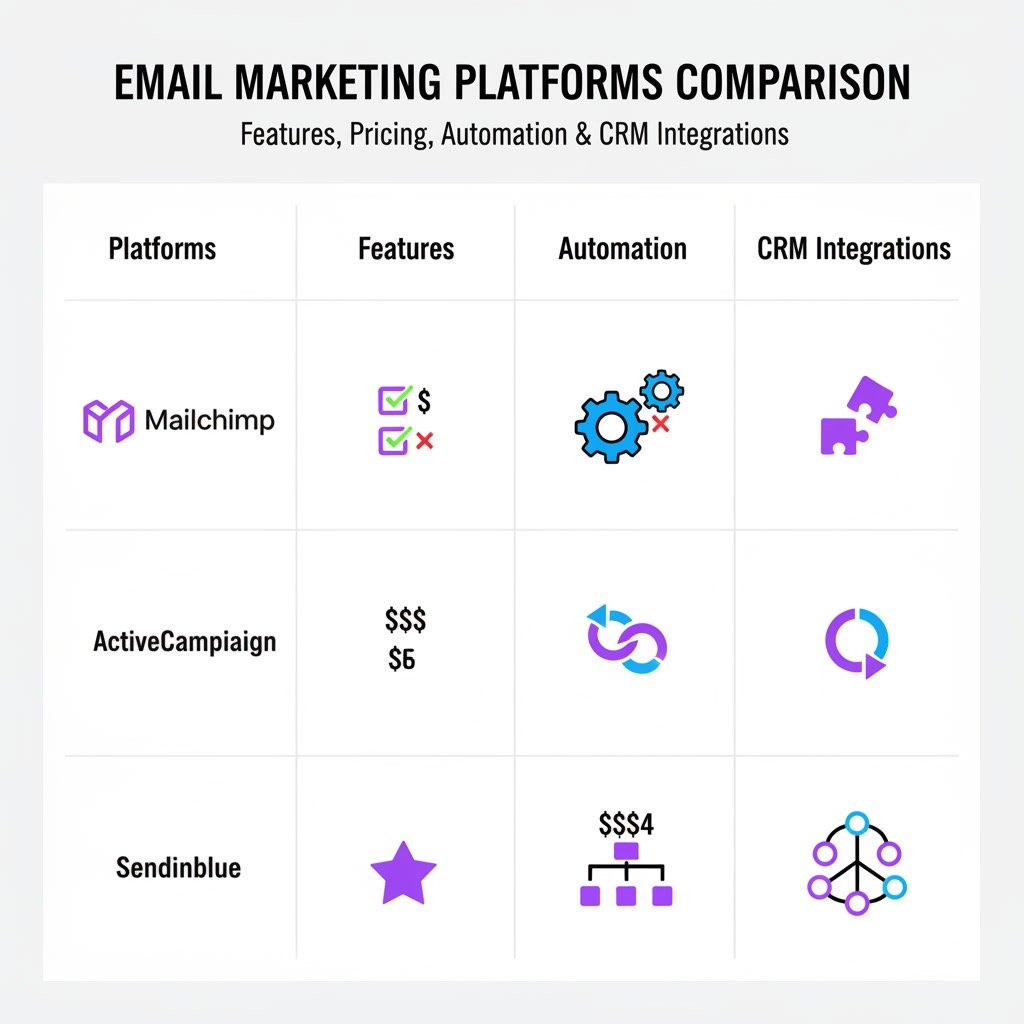
Alternatives
Best choice for beginners
MailerLite is usually the easiest recommendation for beginners. It is clean, affordable, and simple to manage.
Best choice for budget-conscious teams
Brevo often offers the best value if you want email, automation, and SMS without high contact-based pricing pressure.
Best choice for creators
ConvertKit is a natural fit for creators, educators, and newsletter-led businesses.
Best choice for ecommerce
Klaviyo is often the strongest pick for established ecommerce brands, while Omnisend is excellent for stores that want a simpler setup.
Best choice for growing companies with sales teams
HubSpot works well for organizations that need a larger connected system across marketing and sales, though it requires a bigger budget.
Best all-around alternative
GetResponse is one of the more balanced choices if you want broad functionality, useful automation, and extra tools like webinars without jumping to enterprise pricing.
FAQ
What is the best alternative to ActiveCampaign?
The best option depends on your business model. MailerLite is excellent for simplicity, Brevo for value, ConvertKit for creators, and Klaviyo for ecommerce. There is no single best choice for every user.
Why do people switch from ActiveCampaign?
Most users switch because of pricing growth, complexity, or because they do not need the platform’s more advanced automation features. Others move to a tool that better matches ecommerce, creator, or small business needs.
Is there a cheaper option than ActiveCampaign?
Yes. MailerLite and Brevo are commonly more affordable, especially for smaller businesses. Actual savings depend on your contact count, feature needs, and sending volume.
Which platform is best for ecommerce?
Klaviyo is often the top choice for ecommerce brands with a strong focus on customer data and revenue tracking. Omnisend and Drip are also strong options depending on your budget and workflow preferences.
Is ActiveCampaign better than Mailchimp?
For advanced automation and CRM-style workflows, ActiveCampaign is usually stronger. For ease of use and basic marketing needs, Mailchimp may feel simpler and more approachable.
Can small businesses use ActiveCampaign effectively?
Yes, but only if they actually benefit from automation depth. Many small businesses do better with a lighter, lower-cost platform that requires less setup and maintenance.
Final Verdict
ActiveCampaign is still a capable platform, but it is no longer the automatic best fit for every growing business. If you need advanced automation, lead scoring, and closer alignment between marketing and sales, it remains a strong option. But if your needs are simpler or more specialized, a focused alternative can deliver better value with less friction.
MailerLite is best for small teams and beginners who want a clean, affordable system. Brevo is best for businesses that want strong value across email, SMS, and automation. ConvertKit is best for creators and audience-led brands. Klaviyo is best for ecommerce businesses that want detailed customer targeting. HubSpot is best for larger teams that need a broader business platform and can support the cost.
The right choice comes down to fit. Choose the platform that matches your current goals, team capacity, and customer journey complexity. In most cases, the best tool is not the one with the most features. It is the one your team will use consistently and well.
Recommended internal links
- ActiveCampaign Pricing Explained
- Is ActiveCampaign Worth It
- ActiveCampaign for Beginners
- ActiveCampaign Features Explained
- ActiveCampaign CRM Guide
- ActiveCampaign Email Marketing Guide
- How to Use ActiveCampaign
- ActiveCampaign Setup Guide
If you’re also comparing other email marketing platforms, you may want to explore tools like Systeme.io or KlickTipp, which offer strong automation features for growing businesses.
 SolutionsHub Team