

ActiveCampaign for Ecommerce can help online stores build better customer journeys through email, automation, and smarter customer data.
Affiliate disclosure: This article may contain affiliate links. If you purchase through these links, we may earn a commission at no additional cost to you.
Introduction
Email marketing for ecommerce is no longer just about sending newsletters and discount codes. Modern online stores need timely automation, smarter segmentation, and a better way to connect customer behavior with revenue.
That is where ActiveCampaign stands out. It combines email marketing, automation, CRM tools, and customer tracking in one platform, which makes it especially useful for brands that want to move beyond basic campaigns.
If you run an online store and want to improve repeat purchases, abandoned cart recovery, product follow-ups, or customer retention, this guide will show you where ActiveCampaign fits and how to use it well.
Personal Insight
One of the biggest differences I see with ecommerce email tools is how quickly simple campaigns become complicated as a store grows. A platform may feel fine at first, but once you need better segmentation, multi-step automations, and more personalized follow-up, the gaps become obvious.
ActiveCampaign tends to work best for store owners and marketing teams who are ready to treat email as part of the full customer experience, not just a promotional channel.

What Is ActiveCampaign for Ecommerce?
ActiveCampaign is a customer experience automation platform that helps ecommerce businesses manage email campaigns, workflows, customer segments, and sales-related interactions. For online stores, its value comes from connecting customer behavior with automated messaging.
Instead of sending the same email to every subscriber, ecommerce brands can use purchase data, browsing behavior, cart activity, tags, and custom fields to create more relevant campaigns. That means a first-time buyer can receive a different sequence than a repeat customer, and a shopper who abandons a cart can receive reminders based on what they actually viewed.
For many stores, the real advantage is not just sending more emails. It is sending better emails at the right time with less manual work.
How it fits into an online store workflow
In a typical ecommerce setup, ActiveCampaign sits between your store data and your customer communication. It can pull in contact information, order details, product activity, and engagement signals, then use that data to trigger automations.
This allows store owners to build workflows such as welcome sequences, post-purchase education, replenishment reminders, VIP customer nurturing, and win-back campaigns. It also gives marketing teams a stronger view of how subscriber actions connect to conversions.
Key Features
Email automation
Automation is the core strength for ecommerce users. You can build sequences based on actions like subscribing, making a purchase, abandoning a cart, opening an email, or reaching a certain customer tag.
This helps reduce manual campaign work while making communication feel more timely. A welcome flow can introduce your brand, a post-purchase flow can support the customer after checkout, and a re-engagement flow can bring back inactive contacts.
Advanced segmentation
Not all customers behave the same way, so sending everyone the same offer usually leads to weaker results. ActiveCampaign makes it possible to group contacts based on purchase history, engagement levels, products viewed, location, tags, and custom fields.
For ecommerce, segmentation matters because it improves relevance. You can create groups such as high-value customers, first-time buyers, seasonal shoppers, recent non-buyers, or customers interested in a specific product category.
Behavior-based personalization
Personalization in ecommerce should go beyond using a first name. ActiveCampaign supports messaging based on behavior and contact attributes, which gives stores more practical ways to tailor content.
For example, a skincare brand can send different education emails to customers based on the product line they purchased. A fashion store can highlight related categories based on browsing or purchase patterns. This kind of relevance often improves click-through rates and repeat purchases.
CRM and customer tracking
Although many ecommerce businesses focus mainly on email, the built-in CRM can still be useful, especially for higher-ticket products, B2B ecommerce, or teams with customer success and sales involvement.
Customer tracking also gives added visibility into how contacts interact with your site and emails. That helps marketers understand what content leads to action and which customers may need a different type of follow-up.
Integrations with ecommerce platforms
ActiveCampaign becomes far more useful when it is properly connected to your store. Integrations allow customer and purchase data to flow into the platform so automations can use real behavior instead of guesses.
This is important for abandoned cart campaigns, post-purchase sequences, product-specific emails, and audience syncing. A strong integration setup is often the difference between a basic email tool and a true lifecycle marketing system.

Use Cases
Welcome series for new subscribers
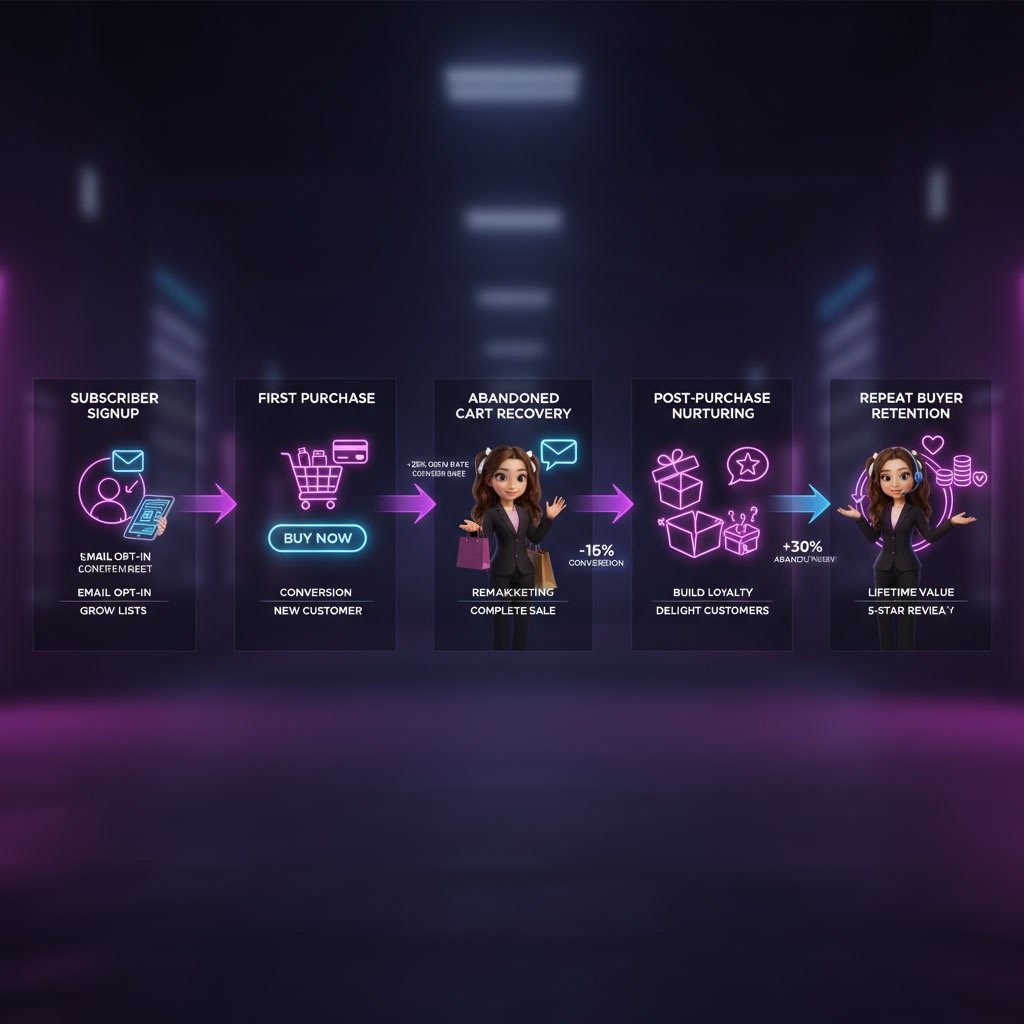
A welcome series is one of the simplest and most effective ecommerce automations. When someone signs up, you can introduce your brand, explain your product benefits, share bestsellers, and guide them toward a first purchase.
Instead of relying on one email, ActiveCampaign lets you create a sequence that unfolds over several days based on how the subscriber engages.
Abandoned cart recovery
Cart recovery is one of the most common ecommerce use cases. When a shopper adds items to a cart but does not complete the purchase, an automation can send a reminder after a set time period.
You can make this flow more effective by adjusting timing, limiting unnecessary friction, and using product-specific messaging where available. In some stores, a second or third reminder also works well, especially when paired with clear product value rather than constant discounting.
Post-purchase follow-up
The customer journey should not end at checkout. Post-purchase automations can confirm expectations, provide education, suggest complementary products, request reviews, or encourage a second order.
This is especially useful for products that need setup guidance, replenishment, or onboarding. A thoughtful post-purchase sequence can improve satisfaction while also increasing retention.
Win-back campaigns
Inactive customers are often overlooked even though they already know your brand. ActiveCampaign can identify contacts who have not purchased or engaged for a certain period and trigger a re-engagement sequence.
These campaigns can highlight new arrivals, useful content, a curated recommendation, or a thoughtful incentive. The key is to make the message relevant instead of sending a generic comeback email.
VIP and repeat customer nurturing
Top customers deserve a different experience than casual shoppers. With segmentation and automation, you can create campaigns specifically for repeat buyers or high-value contacts.
This may include early access, loyalty offers, educational content, or personalized recommendations. Strong retention often comes from making your best customers feel understood, not just targeted.
Best Practices
Start with a few high-impact automations
Many stores make the mistake of trying to build every possible automation at once. A better approach is to begin with the sequences that usually deliver the most value: welcome series, abandoned cart, post-purchase, and win-back.
Once those are working, you can expand into more advanced segmentation and lifecycle campaigns.
Keep segmentation practical
It is easy to build too many audience segments and make your account hard to manage. Focus on segments that support clear business goals, such as increasing first purchases, repeat orders, retention, or average order value.
If a segment does not change your messaging or decision-making, it may not be worth maintaining.
Use customer data with purpose
Having more ecommerce data is not automatically better. What matters is using data in a way that improves timing and relevance. Product category interest, purchase frequency, cart activity, and engagement level are usually more useful than collecting too many extra fields.
Simple, meaningful personalization often performs better than overly complex workflows.
Review automation performance regularly
Once automations are live, they should not be ignored. Check open rates, click rates, conversions, drop-off points, and timing. A workflow that worked six months ago may need changes as your product mix, traffic sources, or audience behavior shifts.
Even small improvements to subject lines, delays, or email order can make a noticeable difference over time.
Protect deliverability
Ecommerce brands often send a high volume of campaigns, especially during promotions and seasonal periods. That makes list quality and deliverability especially important.
Use clean list practices, remove persistently inactive contacts when appropriate, and avoid sending too many overlapping campaigns. Better targeting usually supports better inbox placement.
Common Mistakes
Over-automating too early
Automation should simplify communication, not create confusion. If you stack too many workflows without a clear plan, contacts can receive too many emails or conflicting messages.
Start with a mapped customer journey and identify where automation genuinely improves the experience.
Sending the same message to every buyer
A first-time customer and a long-term repeat buyer should not always receive the same campaign. Without segmentation, even good creative can feel irrelevant.
Basic segmentation alone can make a major difference in campaign performance and customer experience.
Ignoring the post-purchase stage
Many ecommerce brands focus almost entirely on acquisition and cart recovery. That leaves value on the table after the sale. The post-purchase period is one of the best times to build trust, reduce returns, encourage product use, and drive a second purchase.
Relying too much on discounts
Discounts can help in some flows, but they should not become the only way you drive conversions. If every automation depends on a coupon, customers may learn to wait for an offer instead of buying at full value.
Educational content, product benefits, social proof, and timing can often improve performance without constant discount pressure.
Weak integration setup
If your ecommerce data is incomplete or not syncing correctly, automations will be less accurate. That can lead to mistimed emails, poor segmentation, and reporting gaps.
Before building advanced workflows, make sure the integration and contact data structure are working properly.
FAQ
Is ActiveCampaign good for ecommerce?
Yes, it is a strong option for ecommerce businesses that want more than basic newsletters. It is especially useful for stores that need automation, segmentation, behavior-based messaging, and customer journey tracking.
What ecommerce businesses benefit most from ActiveCampaign?
It tends to fit growing stores, established brands, and teams that want to build lifecycle marketing. It can also work well for businesses with repeat purchase potential, educational products, or category-based personalization.
Can ActiveCampaign recover abandoned carts?
Yes, when connected correctly to your ecommerce platform, it can support abandoned cart workflows and follow-up sequences based on customer behavior.
Is ActiveCampaign difficult to set up for an online store?
Setup can be straightforward at a basic level, but the platform becomes more powerful as you invest time in integrations, data structure, and automation planning. New users may need a learning period before getting the most from it.
Does ActiveCampaign work better for email campaigns or full customer journeys?
It is most valuable when used for full customer journeys. While it can handle regular email campaigns well, its real strength is connecting behavior, segmentation, and automation across the customer lifecycle.
Final Verdict
ActiveCampaign is a strong fit for ecommerce brands that want smarter email marketing, better segmentation, and more effective automation across the customer journey. It is not just a tool for sending promotions. It is a platform for building more relevant interactions before and after the sale.
If your store is ready to move beyond one-size-fits-all email blasts, ActiveCampaign can be a valuable next step. It works best for teams willing to set up their data carefully, build a few focused automations first, and improve from there.
Affiliate disclosure: This article may contain affiliate links. If you purchase through these links, we may earn a commission at no additional cost to you.
Recommended Guides
- Activecampaign Pricing Explained
- Activecampaign Alternatives
- Is Activecampaign Worth It
- ActiveCampaign Segmentation Guide: How to Target the Right Audience (2026)
- Activecampaign Campaign Builder Guide
- Activecampaign Integration Guide
- ActiveCampaign Email Delivery Tips: Improve Deliverability
- ActiveCampaign Automation Examples: Real Workflows Explained
- Activecampaign Login Not Working
- Activecampaign Contacts Not Syncing
- Activecampaign Campaign Not Sending
- Activecampaign Ultimate Guide