

ActiveCampaign for marketing automation is a practical way to connect email marketing, customer journeys, and sales follow-up in one system.
Affiliate disclosure: This article may contain affiliate links. If you purchase through these links, we may earn a commission at no additional cost to you.
Introduction
Marketing automation can save time, improve consistency, and help businesses send more relevant messages. But the real value does not come from automation alone. It comes from building workflows that react to what people actually do.
ActiveCampaign is one of the better-known platforms in this space because it goes beyond basic email scheduling. It combines automation, segmentation, CRM activity, and customer behavior tracking in a way that helps teams create more connected campaigns.
This article explains how ActiveCampaign fits into a marketing automation strategy, which features matter most, where it works best, and how to avoid common mistakes that limit results.
Personal Insight
What stands out with ActiveCampaign is not just the number of features, but how much control it gives once you understand the logic behind the workflows. It tends to work best for teams that want something more capable than a simple newsletter tool but still need a system that feels usable day to day.

What Is Activecampaign-for-Marketing-Automation?
ActiveCampaign is a customer experience automation platform that helps businesses automate communication across email, contacts, lead nurturing, and parts of the sales process. In simple terms, it allows you to set rules and workflows so your marketing responds automatically to customer behavior.
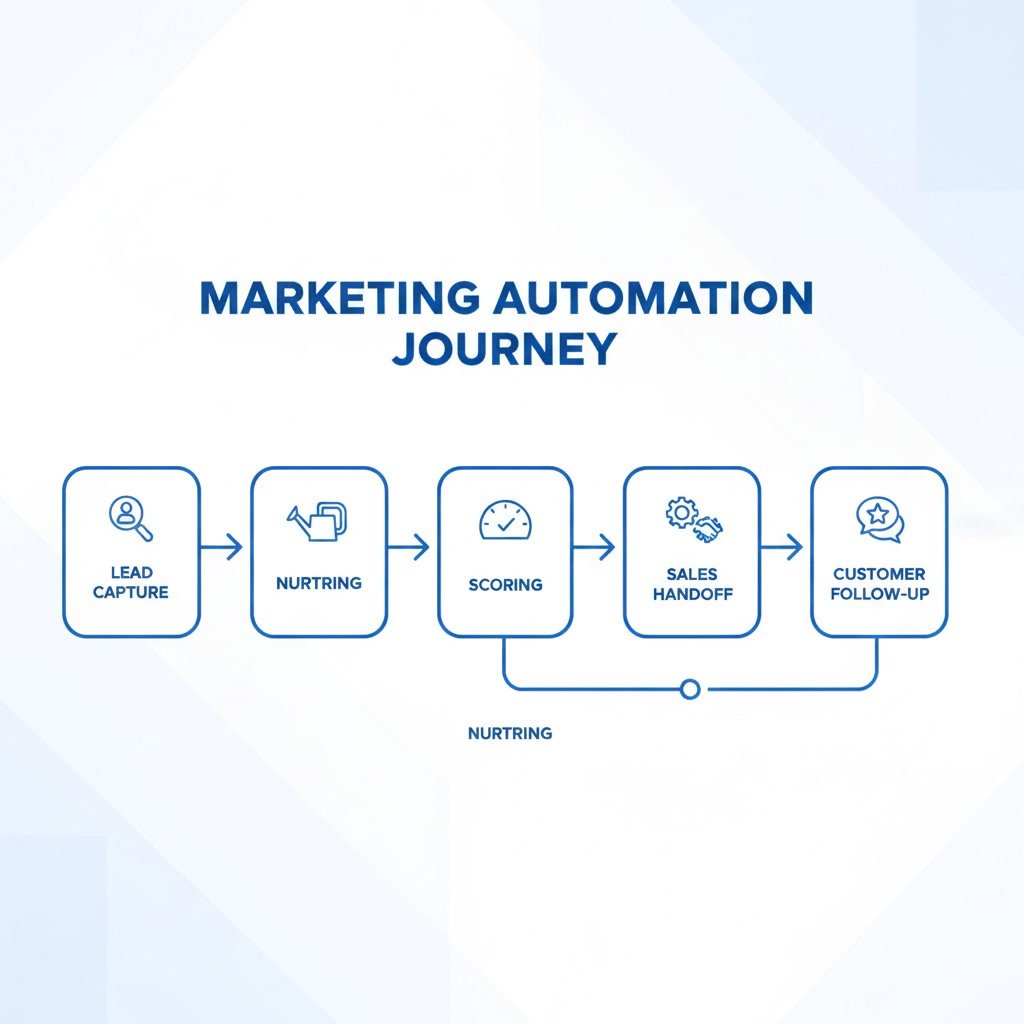
Instead of sending the same message to everyone, you can create paths based on actions like opening an email, visiting a page, submitting a form, making a purchase, or reaching a specific lead score. This makes campaigns more relevant and often more effective.
For many businesses, marketing automation starts with welcome sequences and follow-up emails. With ActiveCampaign, it can expand into abandoned cart reminders, event-based messaging, re-engagement campaigns, sales notifications, onboarding journeys, and post-purchase communication.
Why it matters for modern marketing
People expect timely and relevant communication. If someone downloads a guide, signs up for a demo, or stops engaging with your emails, those actions should shape the next message they receive. Automation makes that possible without requiring constant manual work.
ActiveCampaign is especially useful when a business wants to connect marketing and sales activity more closely. Since contact records, tagging, automations, and CRM actions can work together, teams can create journeys that feel more intentional from first touch to conversion.
Key Features
Visual automation builder
The automation builder is the center of the platform. It lets you create workflows using triggers, conditions, wait steps, goals, and actions. You can map out a customer journey visually, which makes it easier to understand how contacts move from one step to the next.
Typical triggers include form submissions, tag changes, email engagement, purchases, page visits, and date-based events. From there, actions can include sending emails, updating fields, assigning deals, notifying team members, or moving contacts into another automation.
Segmentation and tagging
Segmentation is one of the strongest reasons to use ActiveCampaign for automation. You can group contacts based on demographics, behavior, engagement, purchase history, tags, custom fields, and other data points. This allows you to send different messages to different audiences without building separate systems.
Tags add flexibility because they can represent interests, lifecycle stages, lead sources, event attendance, or customer actions. When used carefully, they help keep automations organized and more targeted.
Email automation and campaign personalization
ActiveCampaign supports automated email sequences with personalization based on contact data. That includes simple items like first name and company, but it can also extend to conditional content, which changes based on who the recipient is.
This is helpful when you want one campaign to speak differently to leads, existing customers, or trial users. Instead of duplicating work, you can adapt content within the same workflow.
CRM and sales automation
For businesses with a longer sales cycle, ActiveCampaign’s CRM features can be part of the automation process. Leads can be assigned to a pipeline, given a task, or routed to a sales rep based on interest, source, or behavior.
This creates a smoother handoff between marketing and sales. Rather than waiting for manual updates, the system can move contacts forward automatically when they meet certain conditions.
Lead scoring
Lead scoring helps teams identify which contacts are most engaged or most likely to convert. Points can be added for actions like email opens, link clicks, webinar signups, page visits, or repeat interactions.
Used well, scoring helps prioritize outreach and improves timing. It also prevents teams from treating every subscriber the same way.
Integrations and data syncing
ActiveCampaign connects with ecommerce platforms, form tools, webinar software, CRM systems, landing page builders, and many other tools. Good integrations matter because automation is only as useful as the data flowing into it.
When contact data, purchases, and behavior events sync correctly, automations become much more relevant and reliable.

Use Cases
Lead nurturing for service businesses
A consulting firm, agency, or B2B service provider can use ActiveCampaign to nurture leads after a form submission. Instead of one generic follow-up, the system can send a sequence based on service interest, company size, or level of engagement.
If a lead clicks on pricing-related content, they can be moved into a sales-ready path. If they stay inactive, they might receive educational content first.
Welcome and onboarding sequences
New subscribers and new customers need different types of communication. ActiveCampaign makes it easier to build onboarding journeys that introduce your brand, explain next steps, and highlight useful resources at the right time.
This use case works well for software companies, membership businesses, online education brands, and subscription services.
Ecommerce follow-up and repeat purchase flows
Online stores can use automation for abandoned carts, post-purchase emails, product education, review requests, and win-back campaigns. Instead of relying only on one-time promotional blasts, they can build customer journeys based on shopping behavior.
This often leads to better timing and more useful communication.
Event and webinar registration workflows
If someone registers for a webinar or event, they usually need a clear sequence: confirmation, reminders, event-day details, and post-event follow-up. ActiveCampaign can automate the full process and change the next message depending on attendance or engagement.
Re-engagement campaigns
Inactive subscribers can hurt performance if they remain in your list without any strategy behind them. ActiveCampaign can identify contacts who have stopped opening emails and place them into a re-engagement sequence. If they still do not respond, you can reduce sending frequency or clean the list more confidently.
Best Practices
Start with one clear goal per automation
Each automation should have a purpose. That could be converting leads, onboarding customers, recovering abandoned carts, or reactivating inactive subscribers. When one workflow tries to do too much, it becomes harder to manage and easier to break.
Keep entry triggers precise
The quality of an automation often depends on how contacts enter it. Use triggers that clearly match user intent. For example, someone downloading a beginner guide should not immediately receive a hard sales sequence unless that action strongly signals buying intent.
Use tags and custom fields consistently
Tags are helpful, but they can become messy fast. Create a simple naming system and document how tags are used. Custom fields should also have a clear purpose. Clean structure makes troubleshooting and scaling much easier.
Map the customer journey before building
It is tempting to build directly inside the platform, but planning the journey first usually saves time. Identify the trigger, key messages, branching logic, and end goal before you start. This leads to more focused automations and fewer fixes later.
Review performance beyond open rates
Open rates can offer some insight, but they should not be the only success metric. Look at clicks, replies, conversions, deal creation, purchases, and journey completion. Automation should support business outcomes, not just email activity.
Test the workflow from the user perspective
Before launching, go through the automation as if you were a real contact. Check timing, message order, personalization, links, and logic branches. Even strong workflows can fail because of a small settings issue.
Common Mistakes
Overbuilding too early
One of the most common mistakes is creating large, complex automation systems before validating the basics. Start with a small number of workflows that cover your most important customer journeys. Complexity should come later, not first.
Sending too many messages
Automation can make it easy to send more emails than intended. When multiple workflows overlap, contacts may receive messages too close together. This can reduce trust and increase unsubscribes. Review the full experience across automations, not just one sequence at a time.
Poor list hygiene
If inactive contacts stay on your list forever, reporting becomes less useful and deliverability may suffer. Good automation includes re-engagement logic, suppression rules, and regular cleanup practices.
Using weak segmentation
Some teams build automation but still send broad messages to mixed audiences. Without meaningful segmentation, the workflow may be automated, but it is not very relevant. Relevance is what makes automation valuable.
Ignoring sales and support input
Marketing automation works better when it reflects real customer questions and objections. Sales and support teams often know where contacts hesitate, what people ask before buying, and which follow-ups matter most. Their input can improve workflow quality significantly.
FAQ
Is ActiveCampaign good for beginners?
It can be, but there is a learning curve. Beginners can use it successfully if they start with basic automations and avoid trying to use every feature at once.
What makes ActiveCampaign different from basic email tools?
The main difference is the depth of automation. ActiveCampaign supports behavior-based workflows, detailed segmentation, CRM actions, lead scoring, and more advanced customer journey logic than many simple email platforms.
Can small businesses use ActiveCampaign effectively?
Yes. Small businesses often benefit from it when they want to save time and send more targeted messages. It is especially useful for businesses with repeat customer journeys, lead nurturing needs, or multiple audience segments.
Do I need technical skills to use it?
Not necessarily. Most core features are designed for marketers and business owners, not developers. Still, planning, testing, and organizing your data well will make a big difference.
Is ActiveCampaign only for email marketing?
No. Email is a major part of the platform, but it also supports contact management, segmentation, CRM workflows, lead scoring, and cross-tool automation through integrations.
When does ActiveCampaign make the most sense?
It makes the most sense when your business has clear customer journeys and enough volume or complexity to benefit from automation. If your needs are very basic, a simpler tool may be enough.
Final Verdict
ActiveCampaign is a strong fit for businesses that want marketing automation to be more than a simple email autoresponder. Its real value comes from combining workflow logic, segmentation, customer data, and sales coordination in one place.
It is best suited to teams that are ready to think in terms of customer journeys rather than one-off campaigns. If that matches how you want to grow, ActiveCampaign can be a very useful platform for building smarter and more relevant automation over time.
Recommended Guides
- Activecampaign Pricing Explained
- Activecampaign Alternatives
- Is Activecampaign Worth It
- ActiveCampaign Segmentation Guide: How to Target the Right Audience (2026)
- Activecampaign Campaign Builder Guide
- Activecampaign Integration Guide
- ActiveCampaign Email Delivery Tips: Improve Deliverability
- ActiveCampaign Automation Examples: Real Workflows Explained
- Activecampaign Login Not Working
- Activecampaign Contacts Not Syncing
- Activecampaign Campaign Not Sending
- Activecampaign Ultimate Guide